Comparisons
Ocala vs Tampa
Tampa pays better and costs more, and it is on the water in both the good sense and the insurance sense. Marion County is the opposite on all three.
Bottom line
- Hillsborough County's median household income is $79,540 against Marion County's $61,010 — 30 percent higher — and its median home value is $371,500 against $243,100, which is 53 percent higher.
- The housing gap is wider than the income gap. That is the whole arithmetic of this comparison, and it is why people move inland.
- Tampa is coastal, which means storm surge exposure and the insurance that goes with it. Marion County has no coastline and no surge, and that is worth something real.
This is the comparison people make when they already live in Florida and are wondering whether to stop paying metro prices. The numbers are unusually clean.
The table
| Marion County | Hillsborough County | Florida | |
|---|---|---|---|
| Population, July 2025 estimate | 442,660 | 1,574,115 | 23,462,518 |
| Growth, 2020 to 2025 | 17.8% | 7.8% | 8.9% |
| People per square mile, 2020 | 236.7 | 1,428.5 | 401.4 |
| Aged 65 and over | 29.7% | 16.5% | 22.8% |
| Median household income | $61,010 | $79,540 | $74,568 |
| Median value, owner-occupied home | $243,100 | $371,500 | $359,000 |
| Median owner costs, with a mortgage | $1,406 | $2,003 | $1,959 |
| Median gross rent | $1,277 | $1,667 | $1,669 |
| Fair Market Rent, two-bedroom, FY2026 | $1,373 | $1,667 | — |
| Mean travel time to work | 26.8 min | 28.8 min | 28.0 min |
| Bachelor's degree or higher, 25+ | 23.4% | 38.1% | 34.1% |
The arithmetic that decides it
Hillsborough's median household income is 30 percent higher. Its median home value is 53 percent higher.
That gap between the two percentages is the entire case for moving inland. A household that can take its Tampa income with it — remote work, a pension, investments, a business — captures the housing difference and none of the income difference. A household whose income is a Tampa job does not.
Put crudely: if you can keep the salary, moving north is a raise. If you cannot, it is a lateral move that buys you a bigger house and a smaller paycheque.
The coast, which is the other half
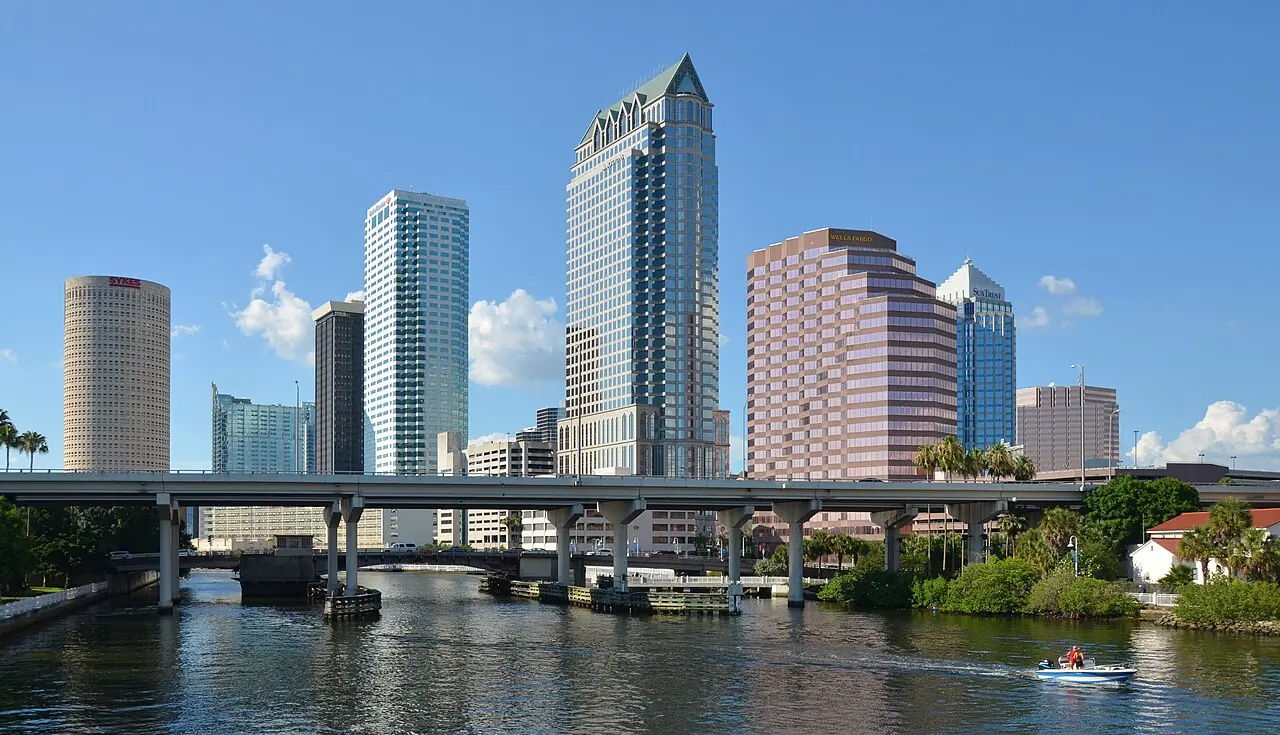
Hillsborough County is on Tampa Bay. That is worth a great deal — it is the reason people love living there — and it comes with a hazard profile Marion County does not have.
The National Hurricane Center is explicit that storm surge and large waves pose the greatest threat to life and property along the coast, and that surge can travel several miles inland. Coastal Hillsborough has surge exposure, evacuation zones and the insurance market that goes with both.
Marion County has no coastline. It gets wind, rain and outages, and it does not get surge. That is a narrower advantage than the marketing usually implies and a real one — the honest full version is in hurricanes in Ocala and why being inland matters.
Insurance follows exposure, and while this site does not publish average premiums — the figures on the open web are not checkable — the direction is not in dispute. It is one of the things that shows up in a Florida budget and is worth getting real quotes on before committing, in either county. What actually drives your Florida home insurance premium covers what is actually being priced.
What Tampa has that Marion County does not
Worth saying plainly rather than pretending the comparison is closer than it is:
- A major international airport, and the flight network that comes with it.
- A deep, diverse job market across finance, healthcare, technology, logistics, tourism and the port.
- Professional sport, culture and restaurants at metro scale.
- Salt water, and everything people do on it.
- A higher-educated workforce: 38.1 percent of adults hold a bachelor's degree against 23.4 percent in Marion County.
Marion County has none of those. Both coasts are a drive rather than an afternoon, and the nearest large airports are also a drive. Airports and drive times from Ocala covers the practical version of that.
What Marion County has that Tampa does not
- Housing at two thirds of the price, in a market where that gap is stable rather than a moment.
- Land. 237 people per square mile against 1,429. Acreage is normal here.
- No storm surge, and no evacuation decision.
- A slightly shorter commute, which is counterintuitive until you remember that Marion County people mostly drive within Marion County.
- A rural landscape — the forest, the springs, the horse farms — that is the actual reason a lot of people stay once they arrive.
Who should choose which
Tampa if your career needs a metro job market, if you fly often, if you want a city's culture on a weeknight, or if being near salt water is part of who you are.
Marion County if your income is portable, if you want land, if you are retiring, if the housing gap is the binding constraint, or if hurricane exposure is what has been putting you off Florida.
And if you are moving from Tampa specifically, the thing to be realistic about is not the house. It is the ninety minutes. Everything Tampa has is still available to you; it is just a planned trip instead of a decision you make at six in the evening. Some people barely notice that change and some people mind it very much, and there is no way to know which you are without trying it.
Sources
- U.S. Census Bureau QuickFacts — Marion County, Hillsborough County and Florida — Hillsborough County: 1,574,115 people (2025 estimate), median household income $79,540, median home value $371,500, median gross rent $1,667, mean commute 28.8 minutes, 1,428.5 people per square mile, 7.8 percent growth 2020-2025, 16.5 percent aged 65 and over. Marion County comparisons on the same page. ACS figures are 2020-2024 five-year estimates in 2024 dollars (retrieved September 18, 2026)
- HUD — Fair Market Rents, FY2026 — Ocala FL MSA two-bedroom $1,373; Tampa-St. Petersburg-Clearwater metro two-bedroom $1,667 (retrieved September 18, 2026)
- National Hurricane Center — Hurricane Preparedness: Hazards — storm surge and large waves pose the greatest threat to life and property along the coast; flooding is the major threat for people living inland (retrieved September 18, 2026)
- Florida Office of Insurance Regulation — the regulator whose filings reflect the difference between coastal and inland wind exposure (retrieved September 18, 2026)
- U.S. Bureau of Labor Statistics — Ocala, FL MSA unemployment rate — 5.8 percent, July 2026, preliminary (retrieved September 18, 2026)
Common questions
Is Ocala cheaper than Tampa?
Substantially, on housing. Median value of an owner-occupied home is $243,100 in Marion County against $371,500 in Hillsborough County, and HUD's FY2026 two-bedroom Fair Market Rent is $1,373 against $1,667 in the Tampa metro. Income is lower too — $61,010 against $79,540 — so the saving is only a saving if your income does not come from the Tampa job market.
Can you commute from Ocala to Tampa?
Not daily in any sane way. It is a long interstate drive each way and not a commuting pattern anybody would choose to repeat. Ocala to Gainesville and Ocala to Orlando are real commutes for some people; Ocala to Tampa is a trip rather than a commute.
Is Tampa or Ocala safer in a hurricane?
Marion County has no coastline, so it has no storm surge, and the National Hurricane Center identifies storm surge and large waves as the greatest threat to life and property along the coast. Tampa Bay is coastal and has surge exposure and evacuation zones. Inland is not immune — the NHC says flooding is the major threat for people living inland — but the single largest hazard does not reach Marion County.
Is there anything Tampa has that Ocala cannot match?
A lot, and it is worth naming plainly: a major international airport, professional sport, a large restaurant and cultural scene, a deep and diverse job market, and salt water. Marion County has none of those and no plan to acquire them. The question is how often you would actually use them and whether being ninety minutes away is close enough.
Why do people move from Tampa to Ocala?
Mostly housing cost and space, and secondly insurance and hurricane exposure. Marion County grew 17.8 percent between 2020 and 2025 against Hillsborough's 7.8 percent, and a substantial part of that is people arriving from more expensive Florida counties rather than from out of state.