Moving basics
Hurricanes in Ocala and why being inland matters
Inland is a real advantage and it is a narrower one than people think. It removes the hazard that kills the most people and leaves every other hazard in place.
Bottom line
- Marion County has no coastline, so it has no storm surge — and the National Hurricane Center says surge and waves are the greatest threat to life and property along the coast. That is the real inland advantage and it is a large one.
- It is not a shield. The NHC also says flooding is the major threat from tropical cyclones for people living inland, and tropical systems routinely drop more than six inches of rain.
- Plan for the outage, not the storm. An inland county's hurricane is usually a wind-and-water event followed by several days without power in August heat.
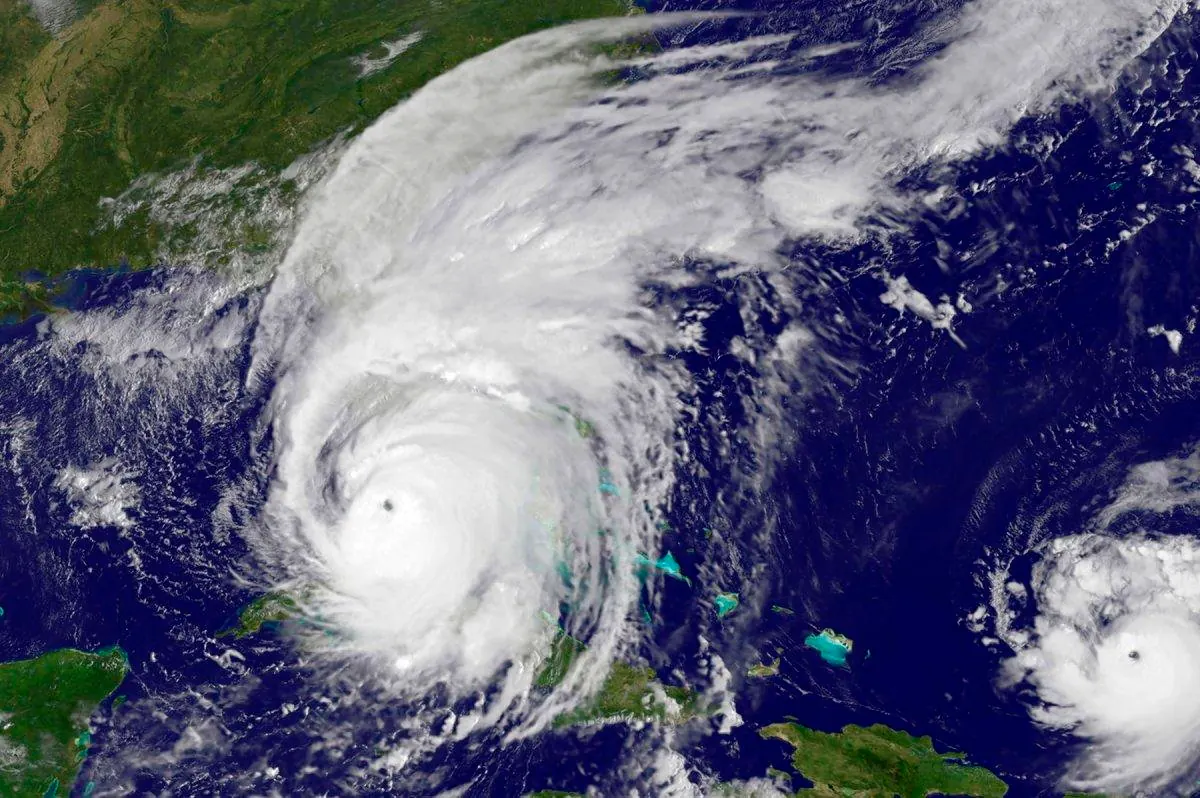
Ask about hurricanes in Ocala and you get two bad answers. One is "we are inland, we are fine", which is wrong. The other is "it is Florida, it is all the same", which is also wrong. The accurate version is narrower and more useful, and it comes down to one hazard.
The hazard inland removes
The National Hurricane Center lists five hurricane hazards: storm surge and storm tide, heavy rainfall and inland flooding, high winds, rip currents, and tornadoes. Of those it singles out the first:
Storm surge and large waves produced by hurricanes pose the greatest threat to life and property along the coast.
Storm surge is a coastal hazard. It is seawater pushed ashore by a storm's winds, it can exceed twenty feet, and the NHC says it "can travel several miles inland". Several miles. Marion County has no coastline at all and its nearest salt water is in the counties to the west and east of it.
So the inland advantage is real and it is specific: the single hazard that kills the most people in hurricanes does not reach here. That is not a small thing. It is the reason evacuation maps for coastal counties exist and Marion County's own planning is about a different set of problems.
It is also the only hazard being inland removes.
What is left, in order of how much it will affect you
Power outages
This is the one that defines an inland hurricane for most households. A county of 1,588 square miles at 237 people per square mile carries a great deal of overhead distribution line through a great many trees. A tropical system takes limbs down across all of it at once. Restoration proceeds from transmission to substations to main feeders to individual streets, which means rural addresses at the end of a line are restored last.
The practical consequence is that your hurricane plan is mostly an outage plan, in August, with no air conditioning. Water, non-cooked food, a way to charge a phone, fuel in the car, cash, and a realistic expectation measured in days rather than hours. Which utility serves your address determines whose restoration map you will be refreshing; the county is split between several.
Rain and freshwater flooding
The NHC is blunt about this one:
In fact, flooding is the major threat from tropical cyclones for people living inland.
Tropical systems "often produce widespread, torrential rains in excess of 6 inches", and — this is the part people get wrong — "rainfall amounts are not directly related to the strength of tropical cyclones but rather to the speed and size of the storm, as well as the geography of the area." A slow, sprawling tropical storm can put more water on Marion County than a fast, intense hurricane. Category number is a wind scale. It is not a rain forecast.
Marion County's geography cuts both ways here. Much of it sits on sandy, well-drained uplands that shed water quickly. But it also contains rivers, a large lake, low-lying areas and a karst landscape where drainage is through the ground rather than over it, and where the ground is already saturated the water has nowhere to go.
Before you buy anything here, check the parcel on FEMA's Map Service Center — it is searchable by address and it is the authority a lender uses. Flood zones in Marion County covers what the zone designations mean and what they do not.
Wind
Inland wind speeds in a landfalling hurricane are lower than at the coast, because a tropical cyclone starts weakening as soon as it loses warm water underneath it. "Lower" is not "low". Central Florida sees sustained tropical-storm-force and gusting hurricane-force winds from systems that were major hurricanes at landfall, and what those winds actually do in a county like this one is take down trees.
Marion County's tree canopy is the reason people move here and the reason the power goes out. A mature live oak is magnificent and it is also several tons of lever arm. Tree work — removing dead limbs, thinning what overhangs the roof — is the most useful hurricane preparation most households here can do, and it is cheaper in February than it is in September.
Wind is also the hazard that prices your insurance, which is a separate article: what actually drives your Florida home insurance premium.
Tornadoes
The outer rain bands of a tropical system spawn tornadoes, and they do it inland as readily as at the coast — often on the right-front side of the track, sometimes well ahead of the centre. They are usually short-lived and weak by tornado-alley standards, and they are still tornadoes. This is why a hurricane that is "only going to be a tropical storm by the time it gets here" still comes with warnings worth acting on, and why the local National Weather Service office rather than a national app is the thing to have open.
Season, and what actually to do about it
The Atlantic season runs June 1 to November 30 and peaks in September. For Florida, August through October is the part that matters.
A useful inland preparation list, in the order things actually go wrong:
- Know your flood zone. Before you buy, from FEMA, not from the listing.
- Know your utility and your restoration expectations. Days, not hours.
- Deal with the trees while nothing is happening.
- Keep the outage kit stocked, not assembled the day before from a shop that has run out of everything.
- Have your insurance documents somewhere you can reach them without power and without the house.
- Follow the National Hurricane Center and the local Weather Service office. Not a forecast graphic somebody reposted.
The honest summary
If you are comparing Marion County to a coastal county, inland is a genuine advantage and you should weigh it. It removes the hazard that does the most damage to life and property, and it removes an evacuation decision that coastal residents have to make every few years.
What it does not do is make a hurricane a non-event. The realistic picture is a long, loud, wet day followed by several days of heat with no air conditioning and a chainsaw in the driveway. People here take that seriously and get on with it. Arriving from somewhere with no hurricanes at all, the thing to internalise is that the preparation is routine and the storm is not.
Sources
- National Hurricane Center — Hurricane Preparedness: Hazards — storm surge is the greatest threat along the coast and can travel several miles inland; flooding is the major threat for people living inland; tropical cyclones often produce rain in excess of six inches; rainfall relates to a storm's speed and size rather than its strength (retrieved September 18, 2026)
- National Hurricane Center — active forecasts, advisories and tropical cyclone reports (retrieved September 18, 2026)
- National Hurricane Center — Storm Surge Unit — storm surge risk mapping and the definition of surge as a coastal hazard (retrieved September 18, 2026)
- National Weather Service — Jacksonville forecast office — the NWS office whose area includes Marion County; local warnings, including tornado warnings in tropical outer bands (retrieved September 18, 2026)
- FEMA Flood Map Service Center — official flood zone determination by address (retrieved September 18, 2026)
- U.S. Census Bureau QuickFacts — Marion County, Florida — 1,588.42 square miles of land area; 236.7 people per square mile, 2020 (retrieved September 18, 2026)
Common questions
Does Ocala get hurricanes?
Yes. Marion County sits in the middle of the Florida peninsula, and systems that make landfall on either coast cross it. What Ocala does not get is storm surge, because storm surge is a coastal hazard and the county has no coast. Every other hurricane hazard the National Hurricane Center lists — high winds, heavy rainfall and inland flooding, tornadoes — reaches inland counties.
Is inland Florida safer in a hurricane?
Safer from the hazard that causes the most deaths, yes. The National Hurricane Center states that storm surge and large waves pose the greatest threat to life and property along the coast, and that surge can travel several miles inland — several miles, not sixty. It also states that flooding is the major threat from tropical cyclones for people living inland, so 'safer' is not 'safe'.
Do I need flood insurance in Marion County?
It depends on the parcel, and you should check rather than assume. Marion County has mapped flood zones along its rivers, lakes and low-lying areas, and a lender will require flood insurance in a high-risk zone. FEMA's Map Service Center is the authority, searchable by address. A property outside a mapped high-risk zone can still flood in a heavy rain event, and flood damage is not covered by a standard homeowners policy.
How long do power outages last after a hurricane in Ocala?
Long enough that it is the thing to plan for. An inland county after a landfalling storm is mostly a tree-and-power-line problem: limbs come down on distribution lines across a large rural service area and restoration takes days rather than hours in the worst-hit pockets. Your utility publishes its own restoration information, and which utility serves you depends on where in the county you are.
When is hurricane season in Florida?
The Atlantic hurricane season runs from June 1 to November 30, and the climatological peak is in September. In practice the months that matter most for Florida are August through October. The National Hurricane Center is the source for both the season dates and any active system, and it is the only forecast source worth reading during one.