Housing
What actually drives your Florida home insurance premium
Florida homeowners insurance is priced on the building, not on the postcode. Two houses on the same street can differ by a multiple, and the reasons are almost all visible from the driveway.
Bottom line
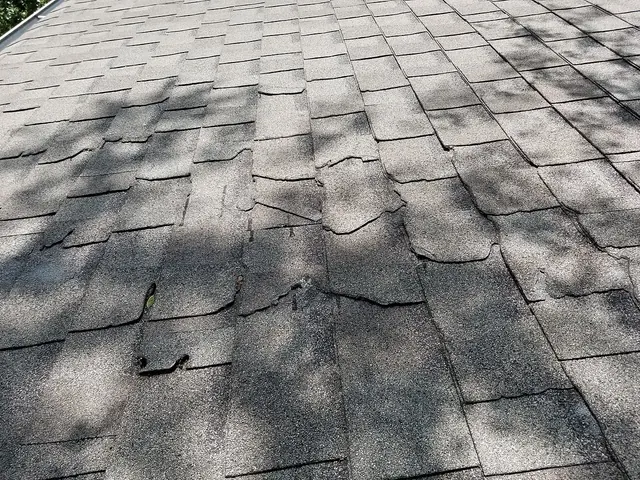
- The roof is the first question and often the whole answer: its age, its material, and how it is attached to the walls. An older roof can make a house uninsurable at any sensible price.
- Get the wind mitigation inspection. Florida law requires insurers to tell you the discounts available for windstorm loss mitigation features, and the inspection that documents them usually pays for itself in the first year.
- Flood is not included. A standard homeowners policy does not cover flood, and FEMA's own NFIP site says almost a third of flood claims come from outside high-risk areas.
This is the line that breaks Florida housing budgets, and it breaks them because people carry over a number from another state. There is no Florida number. There is a number for your house, and it is set by things you can see.
Why this page has no average in it
You will find plenty of published averages for Florida homeowners insurance. Most of them come from sites that make money on the quote, and none of them can be checked, because the underlying basket of houses is not published.
More importantly, an average would be useless even if it were accurate. The spread between two houses in the same county is enormous, and it is driven by building characteristics rather than by location. A 2022 block house with a hip roof and shutters and a 1978 frame house with a twenty-year-old shingle roof are not variations on one number. They are different risks.
So this page tells you what is being priced, so the quotes make sense when they arrive. Rule 10 on this site says every number cites a source or is deleted, and "the average Florida premium" has no source worth citing.
The roof, which is most of it
Ask any Florida underwriter what they want to know first.
Age. Roof age is usually the opening question and sometimes the closing one. As a roof gets older, insurers move from full replacement cost, to actual cash value (depreciated) on the roof only, to declining to quote. The thresholds vary by carrier and by material, and they are the thing to ask about before you are under contract rather than during your inspection period.
Material. Asphalt shingle, metal, tile and flat membrane are treated differently, and the expected service life of each is why.
Shape. A hip roof — sloping on all four sides — performs better in wind than a gable, and it is a documented discount rather than a rule of thumb.
Attachment. How the deck is nailed to the trusses and how the trusses are tied to the walls. Clips and straps are worth real money. This is not visible from the street and it is exactly what the mitigation inspection documents.
Secondary water resistance. A sealed roof deck under the covering, so that losing shingles does not mean losing the ceiling.
If you buy one thing off this page, it is this: ask the roof's age and get the documentation before your inspection period ends.
Wind mitigation, and the form the state prescribes
Section 627.711 of the Florida Statutes requires an insurer, at issuance and at every renewal, to notify you clearly of the availability and the range of every premium discount, credit, rate differential or deductible reduction available for construction features demonstrated to reduce windstorm loss — on a form the Office of Insurance Regulation prescribes.
In practice that means a wind mitigation inspection, on the uniform verification form, documenting:
- roof covering and its compliance with current code,
- roof deck attachment,
- roof-to-wall connection,
- roof geometry,
- secondary water resistance,
- opening protection: impact glass, shutters, rated garage door.
The inspection costs a modest one-off amount and for most Florida houses returns more than that in the first year. If the house has features and nobody has documented them, you are paying as though it does not. Wind mitigation inspections and what they save is on the plan for a later batch and will go through the form line by line.
Everything else that moves the number
Construction type. Concrete block versus wood frame, and the year built. Florida's building code was substantially strengthened after Hurricane Andrew and again since, so the year on the permit is a proxy for how the house was built.
Opening protection. Windows and doors are where wind gets inside and turns a roof into a sail. Impact-rated glazing or shutters, including the garage door, which is the largest opening in most houses and the one people forget.
Claims history — on the property, not just on you. Florida underwriting looks at the address's loss history. A prior water claim can affect the quote for a buyer who has never made a claim in their life.
Distance to a fire station and hydrant, which in a county as rural as this one varies a great deal and is not something people from cities think to check.
Your deductible structure. Florida policies typically carry a separate hurricane deductible expressed as a percentage of the dwelling coverage rather than a flat amount. A 2 percent hurricane deductible on a $350,000 dwelling is $7,000 out of pocket before the policy pays. That is not a detail, it is the number that matters on the day you use the policy.
Flood zone, which affects the flood policy rather than the homeowners one — see below.
Flood is a separate policy, and nearly everyone gets this wrong
A standard Florida homeowners policy does not cover flood. Flood cover comes from the National Flood Insurance Program or a private flood insurer, and a lender will require it if the property sits in a high-risk zone.
FEMA's own consumer site is blunt about the rest of the map: almost one-third of NFIP flood insurance claims come from outside high-risk flood areas, and 90 percent of presidentially declared U.S. natural disasters involve flooding. Being outside a mapped zone is a reason to price the cover, not a reason to skip it — particularly in a county with rivers, lakes, and a landscape where heavy rain drains through the ground rather than over it. Flood zones in Marion County covers the zone letters and what they mean.
What to actually do, in order
- Ask the roof's age and material before you make an offer. It is the cheapest question on this list and the most expensive one to skip.
- Get real quotes during the inspection period, on the actual address, from more than one carrier. Not an online estimate — a quote.
- Get the wind mitigation inspection and give the form to every carrier you are quoting.
- Price flood separately, whatever the zone says.
- Read the hurricane deductible, not just the premium.
- Check the address's claim history through your carrier.
If the numbers come back in a range you were not expecting, that is the system working: you found out during the inspection period rather than at renewal. The only bad version of this is the one where nobody asked until after closing.
Questions about a specific policy, a denial, or an insurer's conduct go to the Florida Department of Financial Services' Division of Consumer Services. This site has no relationship with any insurer and cannot have one — the reason is on the affiliate disclosure page.
Sources
- Florida Statutes section 627.711 — Notice of premium discounts for hurricane loss mitigation — insurers must notify applicants and policyholders of the availability and range of premium discounts for windstorm loss mitigation features, on a form prescribed by the Office of Insurance Regulation (retrieved September 18, 2026)
- Florida Office of Insurance Regulation — the regulator that reviews property insurance rate filings and prescribes the uniform mitigation verification form (retrieved September 18, 2026)
- Florida Office of Insurance Regulation — tools and data — published insurer data and consumer comparison tools (retrieved September 18, 2026)
- Citizens Property Insurance Corporation — Florida's insurer of last resort; eligibility and inspection requirements (retrieved September 18, 2026)
- Florida Department of Financial Services — Division of Consumer Services — where a Florida insurance complaint or question goes (retrieved September 18, 2026)
- FEMA — FloodSmart, the National Flood Insurance Program — almost one-third of NFIP flood insurance claims come from outside high-risk flood areas; 90 percent of presidentially declared U.S. natural disasters involve flooding (retrieved September 18, 2026)
- FEMA Flood Map Service Center — official flood zone determination by address (retrieved September 18, 2026)
Common questions
Why is homeowners insurance so expensive in Florida?
Because Florida's exposure is genuinely different: hurricane wind across a peninsula, a long coastline, and a large concentration of insured property. The premium you personally pay is then set by the building — roof age and material, construction type, wind mitigation features, the year built, the flood zone and the claims history on the address. This site does not publish an average, because a Florida average is a number that applies to nobody.
What is a wind mitigation inspection and is it worth it?
An inspection that documents the features of your house that reduce windstorm loss — roof covering and deck attachment, roof-to-wall connections, roof geometry, secondary water resistance, and opening protection — on a form prescribed by the Office of Insurance Regulation. Section 627.711 of the Florida Statutes requires insurers to notify you of the discounts available for those features. For most Florida houses the inspection costs a small fraction of the first year's saving.
How old can a roof be and still be insurable in Florida?
There is no single answer and it depends on the material and the insurer, which is exactly why it is worth asking before you are under contract. Shingle roofs are typically scrutinised earlier than metal or tile. What matters practically is that roof age is often the first underwriting question, and on an older roof the choice may be between replacing it, accepting a policy that only pays actual cash value for it, or not being offered cover at all.
Does homeowners insurance cover flood?
No. Flood is separate, through the National Flood Insurance Program or a private flood policy, and a lender will require it in a high-risk zone. FEMA's own consumer site states that almost one-third of NFIP claims come from outside high-risk flood areas, so a property being outside a mapped zone is a reason to price flood cover rather than a reason to skip it.
What is Citizens Property Insurance?
Florida's state-created insurer of last resort, for property owners who cannot obtain coverage in the private market at comparable cost. It has its own eligibility rules and its own inspection requirements, and it is not designed to be the cheapest option. Its own site is the authority on whether a specific property qualifies.