Lifestyle
Beaches within reach of Ocala
Nothing in Marion County is close to salt water, and nothing in Marion County is far from it either. The Atlantic and the Gulf are both a morning's drive, and they are completely different days out.
Bottom line
- Daytona Beach is about 64 straight-line miles east and Cedar Key about 54 west. Neither is an afternoon decision; both are an ordinary day out.
- The two coasts are genuinely different products. The Atlantic side has surf, wide hard sand and towns built around beach tourism. The Gulf side is shallow, calm, and mostly salt marsh, islands and fishing towns rather than beach resorts.
- If regular salt water is central to your life, an inland county is the wrong answer and the housing saving will not fix it. If it is a few times a year, this is entirely workable.
Marion County has no coastline. That is the single most important fact on this page, it is the reason hurricanes here are a different proposition, and it is the thing people weighing a move need to price honestly.
The good news is the geography: Ocala sits close to the middle of the peninsula, so both coasts are reachable, and they are genuinely different days out.
The distances, and where they come from
Straight-line, great-circle distances computed from the Census Bureau's 2024 Gazetteer internal-point coordinates. Road distance and drive time are both longer — these are here because they have a source, and published drive times generally do not.
| Coast | Place | Straight-line miles from Ocala |
|---|---|---|
| Gulf | Inglis | 32 |
| Gulf | Crystal River | 34 |
| Gulf | Homosassa Springs | 35 |
| Gulf | Yankeetown | 38 |
| Gulf | Cedar Key | 54 |
| Atlantic | Daytona Beach | 64 |
| Atlantic | Ormond Beach | 64 |
| Atlantic | Crescent Beach | 67 |
| Atlantic | New Smyrna Beach | 73 |
In practice: about an hour and a half either way, and the Gulf-side places that are closest are not beach towns.
The Atlantic side: surf and a wide beach
Head east on State Road 40 and you come out around Ormond Beach and Daytona Beach, roughly 64 miles away in a straight line.
This is the coast people mean when they say beach. Wide, firm, pale sand; actual surf; a long strip of beach towns with everything that implies — hotels, restaurants, boardwalk, the speedway, and traffic on a summer weekend. Further south, New Smyrna Beach is quieter and a longer drive at about 73 miles. North, Crescent Beach and the Anastasia Island stretch below St Augustine are about 67 miles and considerably calmer.
One genuinely unusual feature of the Daytona stretch: driving on parts of the beach is permitted on designated sections, for a fee, under rules managed by the county. Access, hours and sections change, so check with the managing authority rather than with an article — this one included.
The Atlantic side is the answer for: surf, a proper sandy beach day, and a beach town with things to do when you get off the sand.
The Gulf side: shallow water and a different idea of coast
Head west and you reach the Gulf sooner — Inglis at about 32 miles, Crystal River at 34, Homosassa Springs at 35 — but adjust your expectations before you go.
This part of Florida's Gulf coast is the Nature Coast: shallow water, salt marsh, oyster bars, islands and small fishing towns. It is not a wide-sand beach coast. What it is instead is quiet water, fishing, kayaking through marsh and river mouths, and the spring-fed rivers that run into the Gulf — Crystal River and Homosassa — where manatees gather in the cold months because the springs hold a constant temperature.
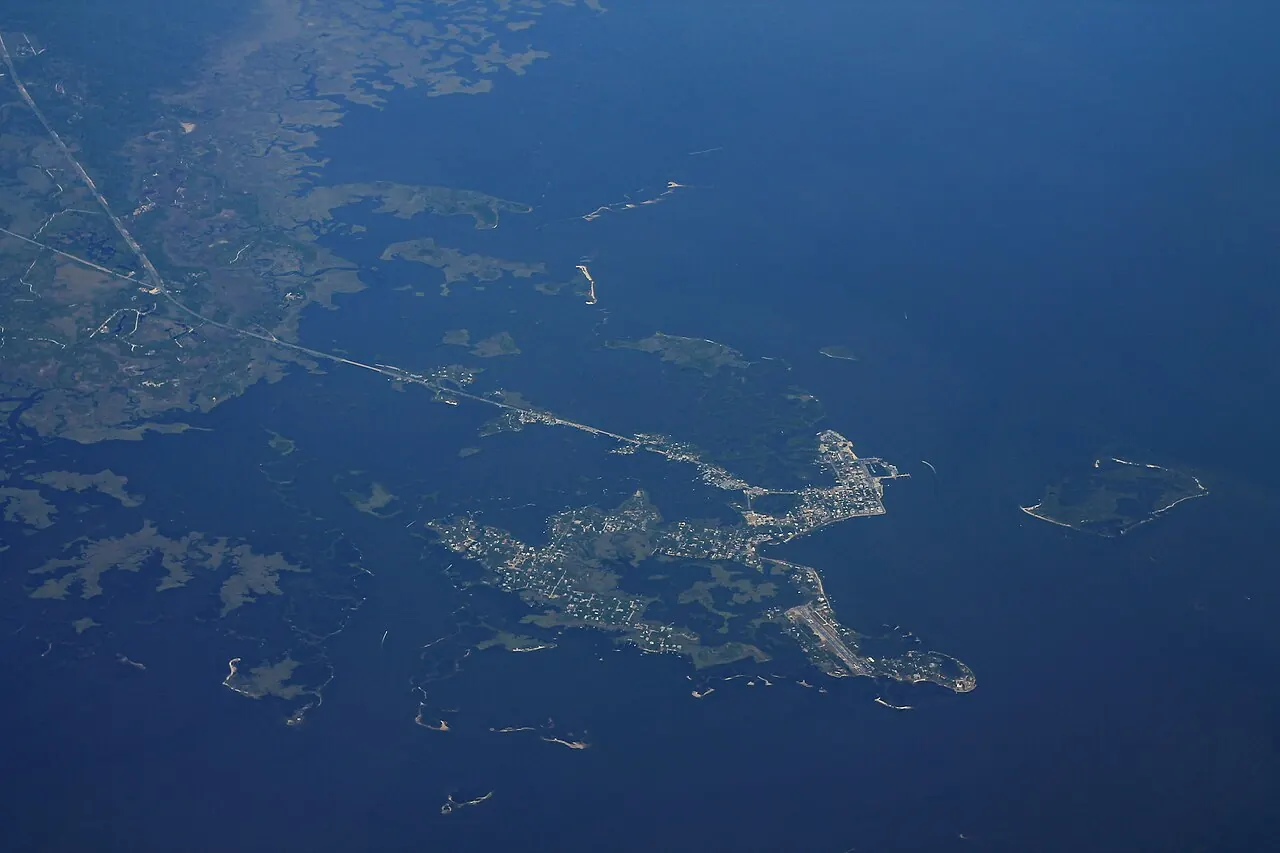
Cedar Key, about 54 miles out, is the classic destination on this side: a small island town, weathered and quiet, built over shallow water, with no strip and no high-rises. People love it precisely because it is not a beach resort.
The Gulf side is the answer for: calm shallow water for small children, fishing, kayaking, manatees, and a day out that is not about lying on sand.
The alternative nobody mentions
Marion County's own water is fresh, and it is much closer than either coast.
The county contains a large part of the Ocala National Forest and several major springs, which run at a constant temperature year-round — cold in August, warm in January. The Silver River and the Rainbow River are both inside the county. For swimming, paddling and simply getting into water on a hot afternoon, these are twenty minutes away rather than ninety.
A lot of people who move here expecting to drive to the coast every other weekend end up at a spring instead, because it is closer, cooler and quieter. The Ocala National Forest covers the larger version of that.
The honest answer to the underlying question
If the beach is a few times a year, Marion County works fine. Both coasts are an ordinary day out, you get to choose which one suits the day, and the springs cover most of what you would actually have used a beach for.
If the beach is part of your week — if you swim in salt water regularly, surf, keep a boat on the coast, or simply need to see the ocean to feel right — then an inland county is the wrong answer, and no amount of housing saving compensates for a ninety-minute drive standing between you and the thing you moved to Florida for.
That is a decision about you rather than about Ocala, and it is much cheaper to make before the move than after it.
Sources
- U.S. Census Bureau — 2024 Gazetteer Files, Florida places — internal point coordinates for Ocala, Daytona Beach, Ormond Beach, New Smyrna Beach, Crescent Beach, Cedar Key, Crystal River, Homosassa Springs, Yankeetown and Inglis, from which the straight-line distances on this page are computed. Great-circle miles, not road miles (retrieved September 18, 2026)
- Florida State Parks — the state park system, which manages a large share of Florida's publicly accessible coast and the springs inland (retrieved September 18, 2026)
- U.S. Census Bureau QuickFacts — Marion County, Florida — 1,588.42 square miles of land area; Marion County has no coastline (retrieved September 18, 2026)
- National Hurricane Center — Hurricane Preparedness: Hazards — storm surge is a coastal hazard and the greatest threat to life and property along the coast — the other side of being landlocked (retrieved September 18, 2026)
- USDA Forest Service — Ocala National Forest — the freshwater alternative that is much closer than either coast (retrieved September 18, 2026)
Common questions
What is the closest beach to Ocala?
It depends which coast and what you mean by beach. On the Atlantic side, Daytona Beach and Ormond Beach are both about 64 straight-line miles east. On the Gulf side, Cedar Key is about 54 miles west, though it is a fishing and island town rather than a wide sandy beach. Crystal River and Homosassa Springs are closer still, about 34 and 35 miles, and are spring-fed river towns on the Gulf rather than beach destinations.
How far is Ocala from the beach?
Roughly an hour and a half of driving in either direction, give or take the traffic and which beach you pick. The straight-line distances — about 64 miles to Daytona, about 54 to Cedar Key — understate the road trip, as straight-line distances always do.
Which coast is better from Ocala, the Gulf or the Atlantic?
They are different rather than better and worse. The Atlantic side gives you surf, a wide firm beach and beach towns with everything that implies. The Gulf side here is shallow, calm and quiet, with salt marsh, islands, fishing and spring-fed rivers where the manatees winter. Families with small children often prefer the calm water; anyone who wants waves goes east.
Can you drive on the beach at Daytona?
On designated sections, with restrictions that change and with a fee, managed by the county rather than by the city. It is a genuinely unusual thing about that stretch of coast. Check the current rules with the managing authority before you go rather than relying on an article, because access and hours change.
Is it worth living inland if you like the beach?
That is the honest question this page exists to answer, and the answer is that it works if the beach is a periodic trip and does not if it is part of your week. Nothing about Marion County's geography is going to change. Weigh it against what the county does have — the springs, the rivers and the forest, which are much closer than any coast.