Moving basics
Insects and wildlife you will actually meet in Marion County
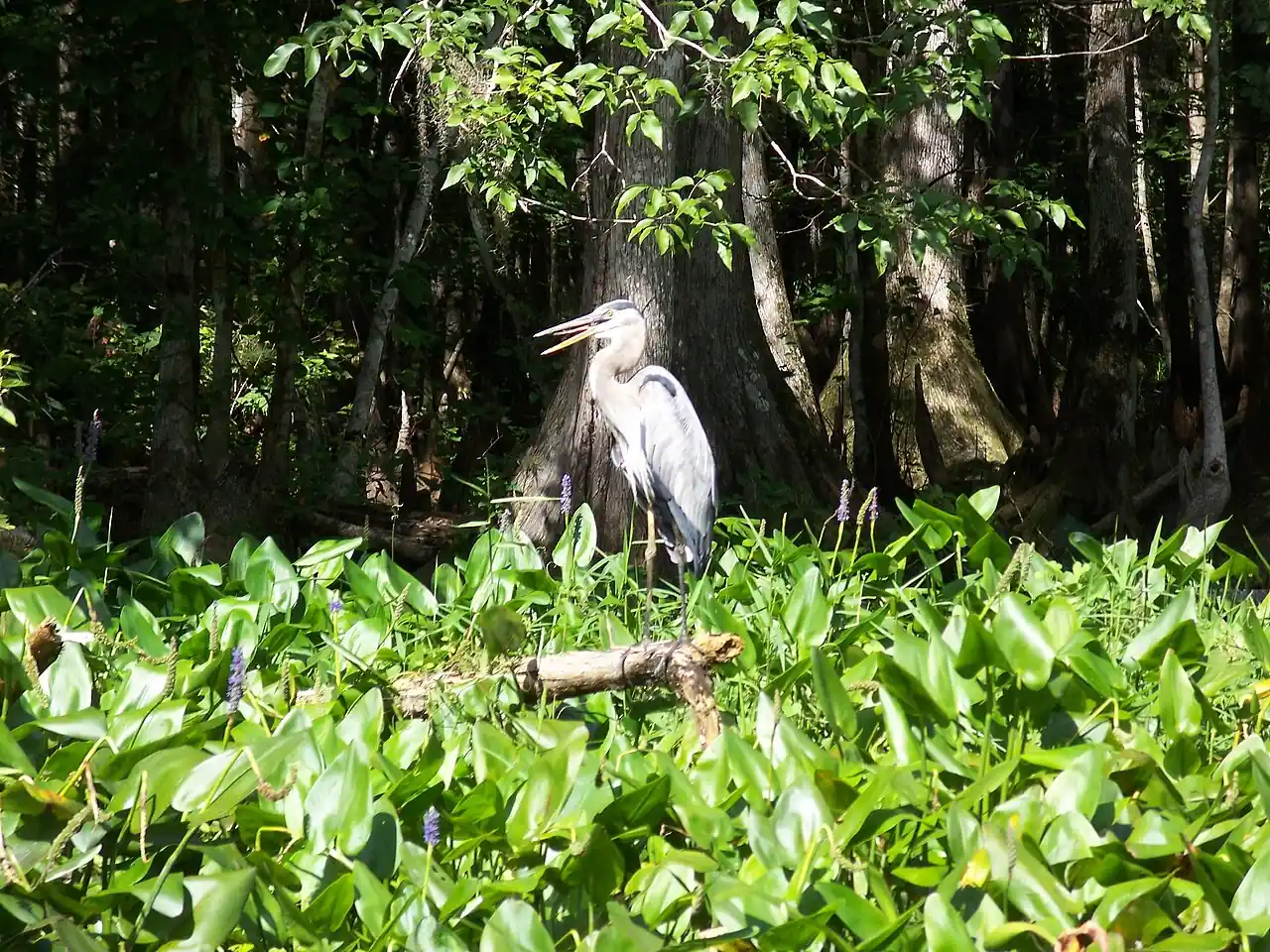
Almost everything people warn you about here is an outdoor animal that occasionally comes indoors. That single fact decides what is worth doing about it, and it is why sealing a door frame beats buying a stronger spray.
Bottom line
- The big insects you will find indoors are outdoor insects that wandered in. UF/IFAS puts the American, Australian, brown and smokybrown cockroaches — the ones everybody here calls palmetto bugs — at 1-1/4 to 2 inches long, and says plainly that "outdoor cockroaches do not survive well indoors." Exclusion beats spraying.
- Two insects actually change your habits: fire ants, whose mature colonies UF/IFAS puts at as many as 240,000 workers, and mosquitoes, of which Florida has over 80 species. Both are managed in your own yard, not in your house.
- The large animals are real and mostly uneventful. Six of Florida's 50 native snake species are venomous, the FWC says serious alligator injuries are rare in Florida, and the statewide black bear estimate is about 4,050 — and every piece of advice about all three comes down to not leaving food out.
I moved here from Miami, where the insect situation is roughly the same and nobody mentions it, and I still underestimated two things about inland Marion County: how much of the wildlife question is actually a landscaping question, and how fast a screened door stops mattering once the frame around it has a gap in it.
So this is the practical version. What comes inside, what stings, what is only a seasonal nuisance, and the honest size of the alligator, snake and bear question from the agencies that count them.
The thing to understand first
Most of what you will meet indoors is an outdoor animal that wandered in. That is not a reassurance, it is a strategy. Outdoor insects that come in through gaps are a sealing problem; insects that actually live indoors are a different problem with a different fix. UF/IFAS draws the line in one sentence:
Outdoor cockroaches do not survive well indoors.
Everything below follows from which side of that line a given animal is on.
The large brown roach everybody calls a palmetto bug
It is a cockroach. UF/IFAS is specific about which ones earn the local name: the American, Australian, brown and smokybrown cockroaches, all of them 1-1/4 to 2 inches long, "often called palmetto bugs." There are at least 69 cockroach species in the United States, and these are the big outdoor ones that live in mulch, leaf litter and tree holes and occasionally walk under a door.
Finding one of these does not mean your house is infested. It means your house has a gap. The response is mechanical:
- Caulk or seal cracks and gaps around door and window frames. This is UF/IFAS's own first instruction and it is the single highest-value thing you can do.
- Move the habitat away from the wall. Mulch, firewood, leaf litter and dense plantings pushed up against the slab are a staging area.
- Kill the water. German cockroaches — the indoor species — can survive only 12 days with food but no water, and about 42 days with water and no food. Water is the limiting resource, which is why a dripping hose bib or a slow trap matters more than crumbs.
The German cockroach is the one that genuinely lives in a house, and UF/IFAS notes that it "is usually found in the kitchen and bathroom." It also names the most common way it arrives: "German cockroaches can initially infest a structure when infested grocery bags are brought inside." Flattened boxes and grocery bags from the car into the pantry is the actual transmission route, which is worth knowing because it is fully under your control.
Fire ants, which change how you cross a lawn
This is the insect that most reliably surprises people who moved from a colder state, because it is not an indoor pest and not a nuisance — it is a thing you learn to watch the ground for.
UF/IFAS on the red imported fire ant:
- Mounds are soil and "seldom larger than 46 cm (18 in) in diameter."
- A mature colony "may contain as many as 240,000 workers", with a typical colony at 80,000.
- "When a mound is disturbed, ants emerge aggressively to bite and sting the intruder."
- "A white pustule usually appears the next day at the site of the sting."
Two practical consequences. First, step on a mound once and the response is immediate and collective, which is why you check before you kneel in a flower bed and why children playing barefoot in an unfamiliar yard is the thing to actually pay attention to. Second, the mounds move with the weather: after heavy rain, UF/IFAS says, "the colony may move to higher ground or inside homes to take refuge from saturated soil." That is the mechanism behind ants appearing in a garage the day after a storm, and it means the rainy season and the fire ant season are the same season.
Reactions run from local pain and swelling to anaphylactic shock. If anyone in the household has a known sting allergy, that is a conversation with a doctor before it is a conversation about lawn treatment.
Mosquitoes are a yard problem before they are a county problem
Florida has over 80 mosquito species, and the useful fact about them is how far they travel. UF/IFAS: "Some go only 500 feet from where they emerged; others move dozens of miles from the larval habitat."
The ones biting you on your own patio in the evening are usually the first kind. They hatched on your property, in water you did not think of as water. The pupal stage lasts only about two to three days, so the cycle from standing water to biting adult is short enough that weekly attention is not always enough — UF/IFAS's Florida-specific advice is to flush out containers such as bird baths and bromeliads every three to four days during the summer, against a once-a-week baseline for plant trays and hanging baskets.
The list of things that hold water on a Florida property is longer than it looks:
- Plant saucers, hanging baskets, bromeliad centres.
- Tarps, pool covers, boat covers, wheelbarrows, kids' toys.
- Clogged gutters and the low spot in a flat roof.
- Irrigation valve boxes, uncapped well-pipe sleeves, the dish under an air conditioning condenser.
- Anything that was outside when it last rained hard.
This is the whole of the home mosquito strategy worth your time. Everything else is comfort: screens that actually seal, long sleeves at dusk, repellent on exposed skin.
Lovebugs, which are a car problem
Twice a year — "for only a few weeks every April-May and August-September", in UF/IFAS's words — you will drive through clouds of paired black and orange flies. They are called lovebugs, they are harmless to people, and they are genuinely bad for a car's front end.
Worth knowing:
- They do not bite or sting. UF/IFAS: "lovebugs do not bite, sting, or transmit diseases and are not poisonous."
- They congregate over highways because of the exhaust. Females are attracted to "UV irradiated aldehydes, a major component of automobile exhaust fumes", and heat attracts them too. The interstate is the worst place to be during a flight.
- Adults live about 3-4 days. The flight ends as abruptly as it starts.
- Wash the car within 24 hours. No permanent paint damage occurs if the surface is cleaned before the residue bakes in the sun for a day or two. Wax on the front of the vehicle before a flight season makes removal much easier.
That is the entire lovebug problem: two short windows a year, a dirty bumper, and an inconvenient fortnight for anybody who commutes. The month-by-month shape of the rest of the year is in Ocala weather month by month.
Snakes: 50 species, six of them venomous
The FWC's framing is the one to adopt, because it is both accurate and calming. Florida has 50 species of native snakes, and "only six of Florida's 50 snake species are venomous": the eastern coral snake, southern copperhead, cottonmouth, eastern diamondback rattlesnake, timber rattlesnake and dusky pygmy rattlesnake.
Learn those six on sight. That is the entire homework, and it takes an evening.
The FWC on what to do when you meet one:
Just stand back and observe it. Snakes don't purposefully position themselves to frighten people. They'd much rather avoid encounters and usually will flee.
And on bites: "Snakes usually bite people only if they are molested; it's their only means of self-defense." The large majority of snake-bite incidents involve somebody trying to kill or handle the animal. Not doing that removes most of the risk, and the non-venomous species are actively useful — they suppress rodents, and the FWC notes they "also consume venomous ones."
Practically, on acreage: boots and a flashlight after dark, hands out of woodpiles and out from under sheet metal, and a look before you reach into shrubbery.
Alligators: fresh water is alligator habitat
Assume every pond, lake, river and canal here is potential alligator habitat, because it is. Then read the FWC's own assessment of the risk:
Serious injuries caused by alligators are rare in Florida.
Their standing guidance is short:
- Swim only in designated swimming areas during daylight hours.
- Keep pets on a leash and away from the water. A dog at the water's edge is the single most common avoidable mistake.
- Never feed an alligator. Feeding teaches an animal to associate people with food, which is how a wild alligator becomes a problem alligator.
If a particular animal genuinely is a problem, there is a process rather than an argument with a neighbour: the FWC's Nuisance Alligator Hotline, 866-392-4286, which dispatches a contracted nuisance alligator trapper.
The seasonality is worth having in your head too, because it explains why you see them on roads in spring. Alligators "are most active when temperatures are between 82 and 92 degrees F", stop feeding below 70 and go dormant below 55. Courtship starts in early April, mating is in May or June, females lay an average of 32 to 46 eggs in late June or early July, and the eggs hatch from mid-August through early September. Spring is when they move.
Bears, which are a garbage question
Black bears are a real consideration on the wooded eastern side of the county, where the Ocala National Forest begins. The FWC estimates approximately 4,050 black bears in Florida. Males usually weigh 250 to 350 pounds, females 130 to 180, and an adult male's home range is about 60 square miles against about 15 for a female — which is why a bear can show up somewhere no bear has been seen in years.
The reason this is a solvable problem is in the diet: about 80 percent of a black bear's diet is plants, 15 percent insects and 5 percent meat. A bear in your driveway is looking for calories, not for you. The FWC reduces the whole subject to one line:
The best way to enjoy our wildlife is to keep them wild and away from food sources like garbage, pet food, and bird seed.
In practice that is: garbage out on the morning of collection rather than the night before, a secured can or a bear-resistant can if you are near the forest, pet food indoors, bird feeders taken down seasonally, and a cleaned grill.
The practical list
- Seal the house before you treat it. Door sweeps, window frames, the gaps where pipes and cables enter, the garage door edges. This is UF/IFAS's first recommendation and it does more than any product.
- Walk the yard for standing water, then do it again every few days in summer. Three to four days is the Florida interval for bird baths and bromeliads.
- Pull mulch, firewood and dense planting back off the foundation.
- Look at the ground before you kneel on it. Fire ant mounds are up to 18 inches across and are easy to see once you are in the habit.
- Learn the six venomous snakes. One evening, done permanently.
- Treat every body of fresh water as alligator habitat and keep the dog leashed away from the edge.
- Decide on your garbage routine before you need it, especially east of Ocala. Collection morning, not the night before.
- Budget for a pest-control service if you want one, but price it as a recurring line rather than a one-off. The moving budget calculator is where that kind of first-year item is easiest to see against everything else.
- Keep the FWC hotline somewhere you can find it: 866-392-4286 for a nuisance alligator.
None of this is why anybody moves or does not move here. It is a set of habits you acquire in about a month, mostly consisting of closing gaps and tipping water out of things. The rest of what changes when you land in this county is in the moving basics guides.
Sources
- UF/IFAS Extension — ENY-214, Cockroaches and Their Management — at least 69 cockroach species occur in the United States; the American, Australian, brown and smokybrown cockroaches are 1-1/4 to 2 inches (31-51 mm) long and are often called palmetto bugs; they are generally found outdoors and can become indoor problems when they migrate or are carried indoors; "outdoor cockroaches do not survive well indoors"; the German cockroach is usually found in the kitchen and bathroom and can initially infest a structure when infested grocery bags are brought inside; German cockroaches survive only 12 days with food but no water, and about 42 days with water but no food; inspect groceries before storing and caulk or seal cracks and gaps around door and window frames (retrieved October 1, 2026)
- UF/IFAS Extension — EENY-195, Red Imported Fire Ant — mounds are built of soil and are seldom larger than 46 cm (18 in) in diameter; mature colonies may contain as many as 240,000 workers with a typical colony consisting of 80,000; "when a mound is disturbed, ants emerge aggressively to bite and sting the intruder"; a white pustule usually appears the next day at the site of the sting; reactions range from localized pain and swelling to anaphylactic shock; after a heavy rain the colony may move to higher ground or inside homes to take refuge from saturated soil (retrieved October 1, 2026)
- UF/IFAS Extension — ENY-753, Mosquitoes and their Control — "There are over 80 different species of mosquitoes known to occur in Florida"; all mosquitoes require water for eggs to hatch and for larvae and pupae to grow; the pupal stage lasts about two to three days and the larval stage from several days to several months; "Some go only 500 feet from where they emerged; others move dozens of miles from the larval habitat"; replace bird bath water once a week and empty plant trays and hanging baskets once a week; in Florida it is best to flush out containers such as bird baths and bromeliads every three to four days during the summer (retrieved October 1, 2026)
- UF/IFAS Extension — ENY-840, Living with Lovebugs — lovebugs appear in excessive abundance throughout Florida as male-female pairs for only a few weeks every April-May and August-September; "lovebugs do not bite, sting, or transmit diseases and are not poisonous"; female lovebugs are attracted to UV irradiated aldehydes, a major component of automobile exhaust fumes, and heat also attracts them; adults live about 3-4 days; no permanent paint damage is caused if the surface is cleaned before the coating is baked by the sun for a day or two; the front of a vehicle can be protected with car wax and by removing the lovebugs within 24 hours (retrieved October 1, 2026)
- Florida Fish and Wildlife Conservation Commission — Living with Snakes — Florida has 50 species of native snakes; "Only six of Florida's 50 snake species are venomous" — the eastern coral snake, southern copperhead, cottonmouth, eastern diamondback rattlesnake, timber rattlesnake and dusky pygmy rattlesnake; snakes reduce rodent populations that destroy crops and sometimes carry diseases, and non-venomous snakes also consume venomous ones; "Just stand back and observe it... They'd much rather avoid encounters and usually will flee"; "Snakes usually bite people only if they are molested; it's their only means of self-defense" (retrieved October 1, 2026)
- Florida Fish and Wildlife Conservation Commission — Living with Alligators and Crocodiles — "Serious injuries caused by alligators are rare in Florida, but if you are concerned about an alligator, call FWC's toll-free Nuisance Alligator Hotline at 866-392-4286"; "Swim only in designated swimming areas during daylight hours"; "Keep pets on a leash and away from the water"; never feed an alligator (retrieved October 1, 2026)
- Florida Fish and Wildlife Conservation Commission — Alligator facts — "Alligators are most active when temperatures are between 82 and 92 degrees F"; they stop feeding below 70 degrees and become dormant below 55; courtship begins in early April with mating in May or June; females deposit an average of 32-46 eggs in late June or early July and hatching occurs from mid-August through early September; female alligators rarely exceed 10 feet in length and males grow larger, with a state length record of 14 feet 3.5 inches; juveniles eat primarily insects, amphibians, small fish and other invertebrates, adults eat rough fish, snakes, turtles, small mammals and birds; they prefer freshwater lakes and slow-moving rivers (retrieved October 1, 2026)
- Florida Fish and Wildlife Conservation Commission — Statewide Nuisance Alligator Program — the Nuisance Alligator Hotline is 866-FWC-GATOR (866-392-4286); "When someone concerned about an alligator calls the Nuisance Alligator Hotline, FWC will dispatch a contracted nuisance alligator trapper to resolve the situation"; the agency's stated goal is to manage Florida's alligator population for its long-term well-being and the benefits of people (retrieved October 1, 2026)
- Florida Fish and Wildlife Conservation Commission — Florida black bear facts — "FWC biologists estimate that there are approximately 4,050 black bears in Florida"; males usually weigh 250 to 350 lbs and females 130 to 180 lbs; adult males usually live within a 60 square mile area and females within 15 square miles; "About 80 percent of a black bear's diet comes from plants (e.g., fruits, nuts, berries), 15 percent from insects (e.g., termites, ants, yellow jackets) and 5 percent from meat"; "The best way to enjoy our wildlife is to keep them wild and away from food sources like garbage, pet food, and bird seed" (retrieved October 1, 2026)
Common questions
What are the most common bugs in a Florida house?
The large brown cockroaches people call palmetto bugs, which UF/IFAS identifies as the American, Australian, brown and smokybrown species at 1-1/4 to 2 inches long; ants, including imported fire ants that move indoors after heavy rain; mosquitoes that follow you in through a door; and seasonally, lovebugs on everything outside in April-May and August-September. The important distinction is between the outdoor insects that wander in and the German cockroach, which lives indoors and which UF/IFAS says "is usually found in the kitchen and bathroom." The first group is an exclusion problem. The second is an actual infestation.
Are palmetto bugs the same thing as cockroaches?
Yes. Palmetto bug is the local name for the large outdoor cockroaches, and UF/IFAS says so directly: the American, Australian, brown and smokybrown cockroaches are "often called palmetto bugs." There are at least 69 cockroach species in the United States. The reason the distinction matters is that these ones live outside — in mulch, leaf litter, tree holes and sewers — and come in as individuals, so finding one does not mean the house is infested.
How bad are the mosquitoes in Ocala?
Seasonal, worst in the wet half of the year, and more a function of your own yard than of the county. Florida has over 80 mosquito species, and UF/IFAS notes that flight range varies enormously by species: "Some go only 500 feet from where they emerged; others move dozens of miles from the larval habitat." The practical consequence is that the container mosquitoes biting you in the evening probably hatched on your own property, which is why UF/IFAS advises flushing out bird baths and bromeliads every three to four days during a Florida summer rather than once a week.
Are there alligators in Ocala?
Alligators live in fresh water throughout this part of Florida, so any lake, pond, river or canal should be assumed to be potential alligator habitat. The FWC is direct about the risk: "Serious injuries caused by alligators are rare in Florida." Their standing advice is to swim only in designated swimming areas during daylight hours, to keep pets on a leash and away from the water, and never to feed an alligator. If a specific animal is a genuine problem, the FWC runs a Nuisance Alligator Hotline on 866-392-4286 and dispatches a contracted trapper.
Do you have to think about snakes and bears here?
Think about them, yes; fear them, no. Of Florida's 50 native snake species the FWC counts six as venomous — the eastern coral snake, southern copperhead, cottonmouth, eastern diamondback rattlesnake, timber rattlesnake and dusky pygmy rattlesnake — and its advice on meeting any snake is to stand back and observe, because "they'd much rather avoid encounters and usually will flee." Black bears are a genuine consideration on the wooded east side of the county: the FWC estimates about 4,050 in Florida, says about 80 percent of a bear's diet is plants and 15 percent insects, and reduces the whole subject to keeping them "away from food sources like garbage, pet food, and bird seed."