Work and economy
Major employers in Marion County
Ask who the big employers are and you get a list of names. The more useful answer is the shape: a quarter of the county's jobs are in moving things, and that is because of where Interstate 75 goes.
Bottom line
- Trade, transportation and utilities is the largest sector at 30,800 of the metro's 125,600 nonfarm jobs — about a quarter, and well above what a county this size would usually carry.
- Education and health services is second at 21,800, then government at 15,600 and leisure and hospitality at 15,200.
- Information employment is 700 jobs. If your work is in tech, this is not a local job market and remote is the route.
There are two ways to answer "who are the big employers here". One is a list of company names, which changes and which nobody can source properly. The other is the shape of the employment, which the Bureau of Labor Statistics publishes every month and which tells you far more about whether your career fits.
The shape, as of July 2026
| Supersector | Jobs | Share |
|---|---|---|
| Trade, transportation and utilities | 30,800 | 24.5% |
| Education and health services | 21,800 | 17.4% |
| Government | 15,600 | 12.4% |
| Leisure and hospitality | 15,200 | 12.1% |
| Professional and business services | 11,500 | 9.2% |
| Mining, logging and construction | 11,100 | 8.8% |
| Manufacturing | 10,400 | 8.3% |
| Financial activities | 4,500 | 3.6% |
| Other services | 4,000 | 3.2% |
| Information | 700 | 0.6% |
| Total nonfarm | 125,600 |
All employees, Ocala FL Metropolitan Statistical Area, July 2026, not seasonally adjusted. Shares are computed from those figures.
What the top line means
Trade, transportation and utilities at 24.5 percent is the number that distinguishes Marion County from most counties its size. Roughly one job in four here is in moving, storing or selling things.
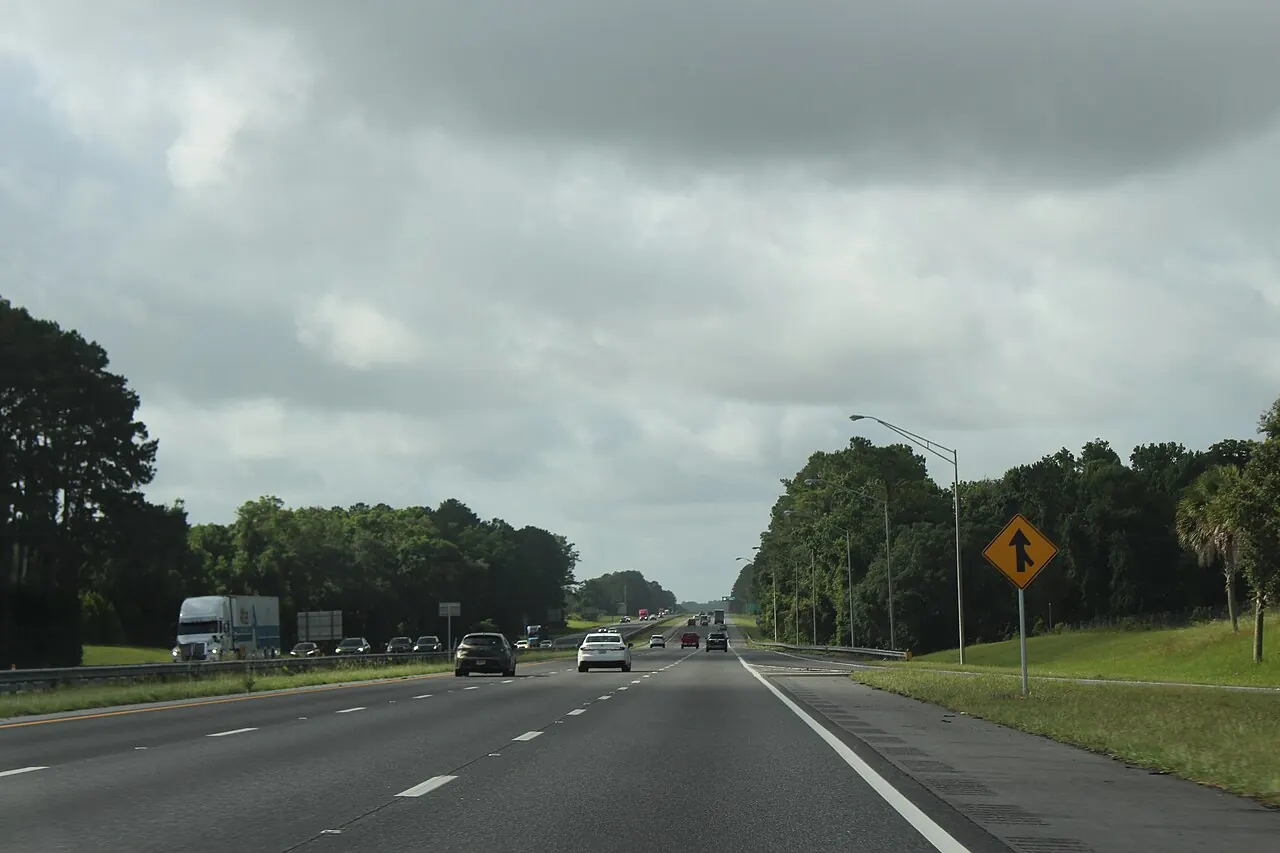
The reason is entirely geographic. Marion County sits on Interstate 75, between the Tampa and Jacksonville regions and within trucking reach of Orlando, with a lot of developable land at lower cost than any of the metros around it. That is precisely the specification a distribution operation is looking for, and the county has attracted them steadily. Census recorded $628.5 million of transportation and warehousing revenue in 2022.
For a job seeker this is good news and it is specific news: warehouse, fulfilment, freight, driving and the supervisory and logistics roles above them are the deepest part of this labour market. Commercial driving in particular is in genuine demand along this corridor.
The second block: education and health services
21,800 jobs, in a county that is 29.7 percent aged 65 and over. Two hospital systems, freestanding emergency departments, outpatient clinics, a large home health and skilled nursing sector, plus the school district.
Census recorded $2.88 billion of health care and social assistance revenue in 2022. This sector is not going to shrink in a county with this demographic profile — the demand is structural.
For clinical staff, and nurses especially, this is a market where you will find work. Hospitals and healthcare in Marion County describes the system from the patient's side.
Government, and what is in it
15,600 jobs — county government, municipal governments, the school district, state agencies with a local presence, and federal employment including the national forest. Government is a large, stable employer in most rural counties and Marion is no exception.
The number that will decide it for some readers
Information: 700 jobs in the whole metro.
That is the supersector covering publishing, broadcasting, telecommunications and data processing. Seven hundred jobs across a metro of 442,660 people.
There is technical work embedded inside healthcare, logistics and government here, and it is real. But if you are a software engineer, a data scientist or anything adjacent, Marion County is not a local job market for you and pretending otherwise would be dishonest. The realistic route is remote work for an employer elsewhere, which is a perfectly good route and depends entirely on the internet at your specific address — remote work from Ocala and whether the internet holds up.
The part the statistics do not show
Marion County has 36,464 nonemployer establishments — businesses with no employees. That is a very large number against 8,389 employer establishments, and it is where a lot of this county's actual economic life sits: the self-employed, the single-person businesses, the trades, and a great deal of the horse industry.
The equine sector is central to what Marion County is, and it does not appear as its own line in standard employment data. The work is spread across agriculture, animal services, transport, construction and veterinary categories, and a large share of it is seasonal, contract or self-employed. So the statistics understate it, and anyone counting jobs from the table above is missing something real about how this county works.
The wage side, which is the catch
Census reports $4.82 billion of annual payroll across 101,916 employees in 2023. That works out at roughly $47,300 per employee, and Marion County's median household income was $61,010 against $74,568 for Florida.
This is the trade that runs through every page on this site: housing here costs about a third less than the Florida median and the wages are lower too. Ocala pay vs Ocala cost of living works that through properly.
Employment did grow 4.3 percent between 2022 and 2023, faster than Florida's 3.7 percent, and metro unemployment was 5.8 percent in July 2026, preliminary — above the national rate published alongside it.
Where to actually look for work
- CareerSource Citrus Levy Marion, the regional workforce board, which carries listings and training programmes and is the free public option nobody uses enough.
- The two hospital systems' own career pages, for anything clinical.
- The county, the cities and the school district, for government work.
- The distribution operations along the interstate corridor, most of which recruit continuously.
- And if none of those fit your field, treat this as a place you bring a job to rather than one you find a job in. Commuting from Ocala to Gainesville and to Orlando cover the third option, which is keeping somebody else's job market and living here.
Sources
- U.S. Bureau of Labor Statistics — State and Metro Area Employment, Ocala FL MSA — all employees by supersector, Ocala FL Metropolitan Statistical Area (area 36100), July 2026, in thousands, not seasonally adjusted: total nonfarm 125.6; trade, transportation and utilities 30.8; education and health services 21.8; government 15.6; leisure and hospitality 15.2; professional and business services 11.5; mining, logging and construction 11.1; manufacturing 10.4; financial activities 4.5; other services 4.0; information 0.7. Retrieved through api.bls.gov/publicAPI/v2 (retrieved September 18, 2026)
- U.S. Bureau of Labor Statistics — Ocala, FL MSA unemployment rate — 5.8 percent July 2026 preliminary; 5.7 June; 5.5 May (retrieved September 18, 2026)
- U.S. Census Bureau QuickFacts — Marion County, Florida — 8,389 employer establishments and 101,916 employees in 2023, with $4,817,909 thousand of annual payroll; 36,464 nonemployer establishments; health care and social assistance revenue $2,875,049 thousand and transportation and warehousing $628,539 thousand in 2022; 4.3 percent employment growth 2022-2023 (retrieved September 18, 2026)
- Florida Office of Economic and Demographic Research — county profiles — the state's own county-level economic and demographic profile series, including Marion County (retrieved September 18, 2026)
- CareerSource Citrus Levy Marion — the regional workforce board covering Marion County; job listings and training programmes (retrieved September 18, 2026)
- Ocala Metro Chamber and Economic Partnership — the county's economic development organisation (retrieved September 18, 2026)
Common questions
What are the biggest industries in Marion County?
By employment, as of July 2026: trade, transportation and utilities at 30,800 jobs; education and health services at 21,800; government at 15,600; leisure and hospitality at 15,200; professional and business services at 11,500; mining, logging and construction at 11,100; and manufacturing at 10,400. Total nonfarm employment in the Ocala metro is 125,600.
Why is logistics so big in Ocala?
Geography. Marion County sits on Interstate 75 between the Tampa and Jacksonville regions and within reach of Orlando, with a great deal of developable land and lower land costs than any of the metros around it. That combination is what distribution operations look for, and it is why trade, transportation and utilities accounts for about a quarter of the metro's jobs.
Are there tech jobs in Ocala?
Very few locally. The information supersector employs about 700 people in the entire metro. There is technical work inside healthcare, logistics and government, but if your career is in software or a related field, the realistic route here is remote work for an employer elsewhere rather than a local job. The internet question is the one that then matters.
Is the horse industry a big employer?
It is central to the county's identity and land use, and it does not appear as its own line in the standard employment statistics — agriculture and animal services sit across several categories and a substantial share of the work is seasonal or self-employed. What is visible is that Marion County has 36,464 nonemployer establishments, which is the statistical category that self-employment and single-person businesses fall into.
How does Marion County's unemployment compare?
The Ocala metro unemployment rate was 5.8 percent in July 2026, preliminary. That sits above the national figure published alongside it by the Bureau of Labor Statistics, and it has been in a similar range through 2026 — 5.5 in May, 5.7 in June.